Earn Your Diploma in 2D Animation & Digital Art
The 2D Animation & Digital Art Diploma at Kelowna, BC's College for Arts and Technology is a comprehensive 15-month program designed to prepare students for in-demand careers in the animation industry. This program equips graduates with the technical skills, creative expertise, and industry connections necessary to excel across film, television, streaming platforms, social media, and interactive media. Join us on campus in Kelowna, or attend the same live classes from anywhere. Either way, you'll learn from the same instructors, on the same schedule, and graduate with your own demo reel ready to show employers.
This hands-on program covers the key skills you’ll need to get noticed and hired, including:
- Foundational skills in traditional drawing and animation
- Digital painting and digital character animation
- Prop, location and character design
- Studio workflow etiquette
- History and cultural significance of the animation industry
- Life Drawing (Including human and animal mechanics)
- Character animation processes and principles
- Storyboarding
- Rigging
- Digital editing and compositing
- Demo reel creation
- Industry standard software including Toon Boom Harmony
Our Grads Power the
Arts & Tech Economy
CAT’s creative and technical programs connect directly to British Columbia’s $6 billion creative economy, which employs over 120,000 skilled arts and tech workers. Our 2D and 3D animation, filmmaking, graphic design, and audio engineering graduates have contributed to award-winning projects, including six Oscar winners and 40+ Emmy, BAFTA, and Game Award recipients like KPOP Demon Hunters, Game of Thrones, Fortnite, and Spider-Man: No Way Home.
Get Info Now
Start Your 2D Animation Career
Animate Your Future
Real instructors. Real studio training. On campus or live online.
Get Info Now
01
Industry Connections
Animation industry professionals as your Instructors and mentors.
02
Let’s Get You Working!
Well-rounded, focused curriculum to get you successfully working as quickly as possible.
03
Degree Pathway Options
Established pathways with BCIT and University of Gloucestershire to further your education after graduation.
04
Top Tech
Latest technology, facilities and equipment in a dedicated animation lab classroom.

Department Head
Sean Ridgway
After graduating in 1992, Sean jumped right into animating and developing CD-ROM games for an independent video game company in Oakville, Ont. In 1994 the attraction of the West Coast and the burgeoning Vancouver animation industry led Sean to work at major pre-production houses in the Lower Mainland such as ‘Studio ‘B’ Productions’ and ‘Bardel Entertainment’ designing for many television shows such as “The Magic School Bus”, and “Tales from the Cryptkeeper”. In 1996 ‘Disney’ came to Vancouver and over the next 4 years Sean helped animate many feature-length projects including the award-winning “Beauty and the Beast: The Enchanted Christmas”.
Always looking for a challenge and a chance to broaden his skills, Sean accepted a position as a computer graphic artist on the ‘NBA Live” team at Electronic Arts Canada in Burnaby, BC.
In 2000, Sean started his teaching career, joining the ‘College for Digital Imaging and Sound’ as an instructor while working full-time in the industry. In 2002, Sean was offered the full-time position of Animation department head at the ‘Center for Arts and Technology’ in Fredericton, New Brunswick and decided to make the journey back east with his family.
Sean returned to BC in 2007 to join the Kelowna team and has been with the College for Arts and Technology for over two decades in the role of Department Head and full-time instructor.
What our grads are saying...
FAQs
Let's Get you answers
We love it when applying students are excited to share their passion for their industry of interest, and applied skills are great too! However, formal knowledge and experience in animation principles is not required. You will however, be required to submit a drawing portfolio for admission into the program (see next question), but we don’t expect you to have ALL the skills before starting the program- that’s why you have come to us!
For complete program details including Admission Requirements, please reach out to a Program Advisor by completing an online inquiry form.
Our online option puts you in the same live classes as our on-campus students, on the same 15-month schedule — not a self-paced or pre-recorded course. You'll learn from the same instructors, follow the same curriculum, and build the same end-of-program demo reel. Hands-on components like life drawing, digital painting, and studio critique are taught live and delivered remotely, so you get the same instruction and feedback as students in the room.
To join online, you'll need your own computer that meets our program's hardware requirements, along with a compatible drawing tablet. We provide software licenses for most required software. A Program Advisor can walk you through the full specs and help make sure your setup is ready before you start.
- 1 drawing of an animal. Drawing should be realistic with shading and detail.
- 1 shaded drawings of a person you know. Drawing should be realistic with shading and detail.
- Character design - 1 original character in 2 different action poses OR 2 different characters in 1 pose each.
- 3 pieces of original artwork - the pieces selected should best demonstrate a range of artistic abilities and sensibilities.
For further details on putting together your portfolio or information about other admission requirements, please reach out to a 2D Animation & Digital Art Program Advisor at 1.866.860.2787 or by filling out our contact form.
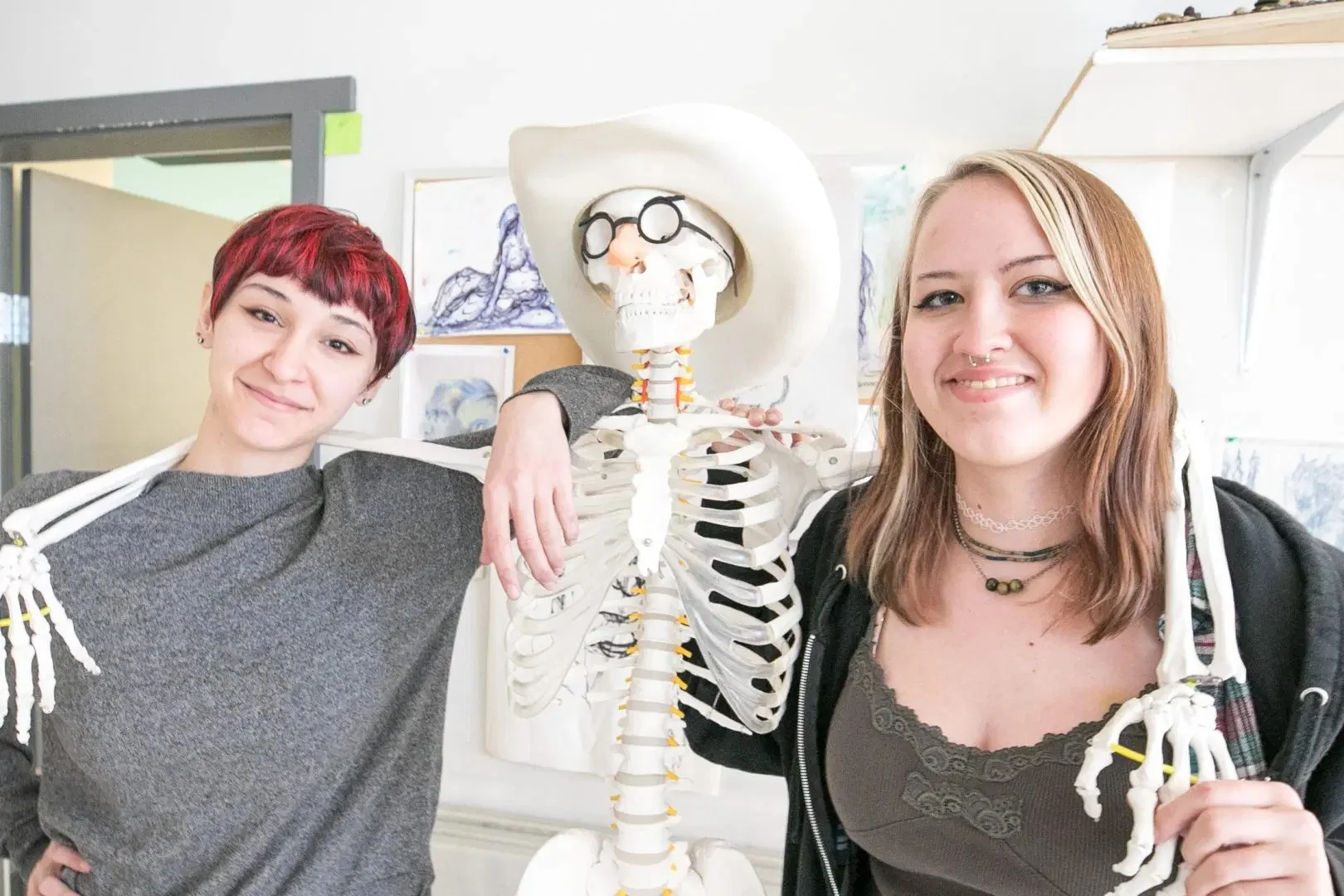
On campus: We've got you covered! Included in your tuition for the 2D Animation & Digital Art program, you'll have access to all the hardware and software you need to shine. 2D Animation students at CAT get to enjoy two dedicated classrooms on campus. You'll take your animation drawing classes, including life drawing and traditional animation, in our Life Drawing Classroom, outfitted with drawing light tables, easels and anything else a budding artist could want. You'll then bring your work to life in our Digital Animation Lab Classroom, set up like a real-world animation studio, complete with digital drawing tablets so you can get familiar working in a studio setting before you ever apply for a position.
Online: You'll need your own computer that meets our program's hardware requirements, along with a compatible drawing tablet, so you can join life drawing, painting, and studio classes live from home. A Program Advisor can walk you through the full specs for both and help make sure your setup is ready before you start.
We maintain close connections with our animation industry partners and studios. Throughout your program, you’ll have info sessions with animation industry guests and you will be exposed to many real-world projects, and become familiar with the animation production pipeline. This early familiarity means that upon graduation, you’ll be more than ready to join the team at any animation studio around the world!
After graduation, you can count on continued support from our Education and Student Success team who will share animation job opportunities with you and provide connections and resources to help you find a placement you love!
Our Program Advisors are able to share more specific examples of graduate career success stories. Please book an appointment by completing an online inquiry form to get started!
We have excellent graduation employment stats from our 2D Animation & Digital Art graduates, so a Degree is not necessary for employment in this industry. You can enjoy the benefits of our small class sizes, mentorship and focused education to get you working sooner! However, if you wish to carry on your education in pursuit of a Degree, we have established pathways from our program with the University of Gloucestershire in England, Langara College and BCIT!
For a more in-depth discussion about our 2D Animation & Digital Art program, please reach out to one of our Advisors by completing an online inquiry form or by calling 1.866.860.2787.
We love this question! While there may be some benefits to being a “jack-of-all-trades” as an animator, we firmly believe that the best route to lasting career success as an animator is specialization. When you stretch yourself to learn both 2D and 3D animation simultaneously, you may find yourself in future work situations where you feel out of your depth or comfort zone. At CAT, we’ve chosen to deliver 2D and 3D animation separately. We feel the differences between 2D and 3D are too great for students to get to the level of comprehension and mastery required by animation studios in the industry, even for entry-level positions.
So yes, you will have to decide on 2D or 3D animation before applying to CAT. But don’t worry, if you decide to start in 2D, but feel drawn to 3D during your program, you can always transition to 3D and vice versa. No matter your path, we’re here to make this work for you. Book an appointment with an Animation Program Advisor, they can answer more in-depth questions and even arrange for a campus tour!
Animation Degree Pathways
Our Post-Graduation Pathways
Our graduates boast exceptional employment stats, so a degree is not necessary to secure a career in 2D Animation. However, should you wish to further your animation education after graduation from our program, we have established pathways with BCIT and University of Gloucestershire. For more information, book a time to speak with one of our Program Advisors or check out our Pathways page.
Finance Options