
What Are You Really Paying For in a Filmmaking Diploma?
Cost is something on a lot of people’s minds these days. Especially with people just like you thinking about going back to school or changing careers for something more interesting, like getting into filmmaking.
And that makes sense.
It’s no secret the cost of living has increased in Canada and in a world full of YouTube tutorials, affordable editing software, and online communities on nearly every platform, it is reasonable to wonder whether paying for a diploma is truly necessary anymore.
After all, if you can learn camera basics, editing shortcuts, lighting setups, and storytelling techniques online, why pay tuition at all?
It is a fair question. But it is also the wrong one you should be asking – especially if you are serious about breaking into a new industry or if filmmaking is more than just a hobby for you.
So instead of “How much does a filmmaking diploma cost?” what you really should be asking is “What do you actually get for that tuition?”
That distinction matters because a filmmaking diploma is not just access to information and basic tutorials. For many students, its value comes from the environment around the learning: the structure, the feedback, the equipment, the accountability, the collaboration, and the support that help turn interest into real progress.
Let’s take a closer look.
Teaching yourself may be cheaper in some regards, but not everything
There is no question that self-teaching can cost less upfront. If you’re disciplined and you found some good tutorial videos online, you can learn quite a bit these days without spending a dime.
So right off the bat, that looks like a big point against going for a proper diploma, especially as there’s no college anywhere in the country that offers completely free tuition without grants, bursaries, and student loans
However, when you focus too narrowly on the price, you might miss that what matters even more than upfront cost is what each path actually gives you in return.
A filmmaking diploma may cost more than learning on your own, but it can also allow you to access things you wouldn’t normally be able to for free. Consider for example the cost of the following:
- Camera and equipment rentals
- Software and subscription fees
- Pay for actors, extras, and the rest of the crew
Not to mention the time to put it all together.
Things like this are often what get in the way for filmmakers looking to go it alone, but when you go to a college with a filmmaking program, they’re built into the cost of your tuition.
Colleges offering filmmaking diplomas help with keeping your learning structured and in order
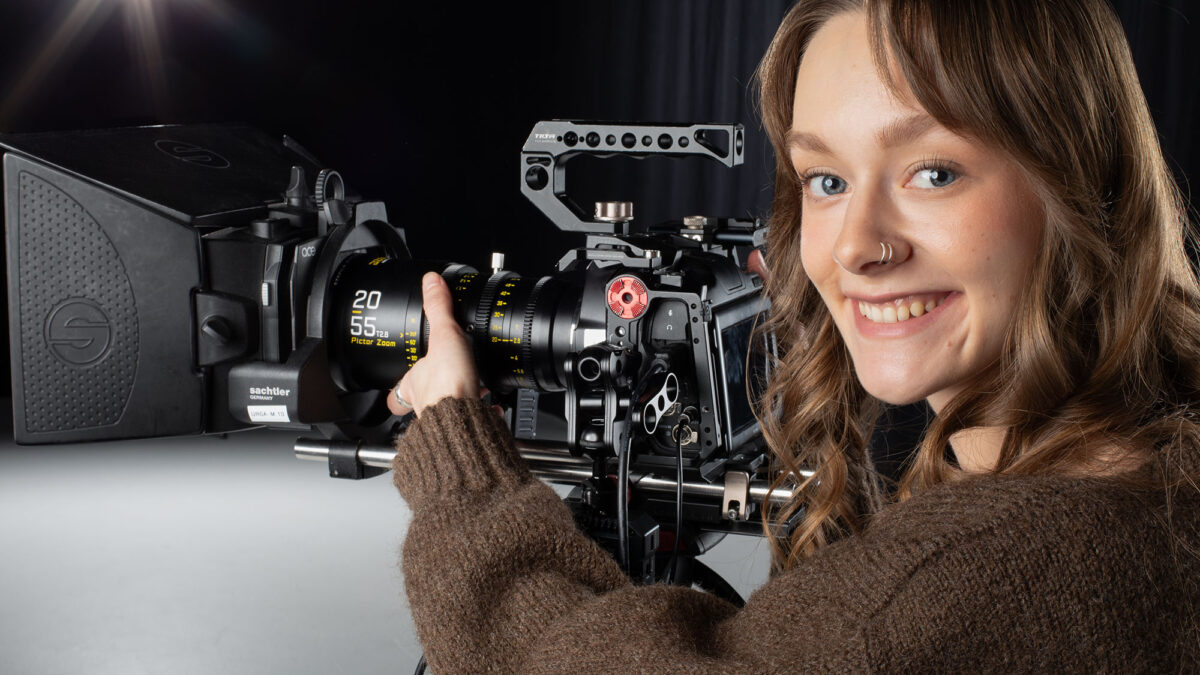
More important than just the material cost of access equipment, the college path offers access to other things that are difficult to build independently. That includes a clearer learning path, direct feedback from experienced instructors, access to professional tools and spaces, more consistent project completion, and stronger support when it comes time to start looking for work.
For many students, that added support is what changes the equation in the favour of going to college. The real value is not just in what you learn but in how much more likely you are to keep improving, finish stronger work, and leave with something concrete to show for the investment.
After all, one of the biggest differences between self-teaching and formal training is not the content itself. It is the order and context in which you learn it.
When folks teach themselves, they often pick up useful skills in fragments. They might learn editing from one creator, camera settings from another, and lighting tips from a third. That can be a great way to begin, but it often leads to a scattered experience. Many learners know a little about many things without fully understanding how those skills connect in real production environments.
A strong filmmaking diploma helps solve that problem by offering a more intentional progression.
Here at College for Arts and Technology, for example, training is spread across multiple areas of the filmmaking process, including screenwriting, cinematography and production, post-production, location audio, narrative and documentary production, corporate and commercial work, and portfolio development. It all unfolds logically and in a structured manner, ensuring that you’re ready to step into a variety of roles for after graduation.
Feedback is one of the most valuable things students pay for
This is one of the easiest parts of the cost conversation to overlook when you’re just focusing on whether a tutorial or course is free.
Online tutorials can teach techniques. They can show you how to use a tool or explain how someone else solved a problem. What they usually cannot do is tell you whether your work is improving.
That is a big gap and a major hurdle towards improving your trade.
Many students who teach themselves can learn how to operate software or imitate a setup, but they still struggle to judge whether their pacing is working, whether their shots are serving the story, whether their lighting choices are effective, or whether their audio is strong enough to hold up in real-world use. Without meaningful feedback, it is easy to plateau and never improve.
That is one reason formal training can feel so different and for many students just like you, that alone can be a major part of what tuition is really buying.
A diploma can help you leave with work you can actually use and land a job faster
In film and video, what you can show often matters as much as what you say you can do. That is why one of the most practical ways to evaluate the cost of a filmmaking diploma is to ask whether it helps you graduate with a stronger portfolio.
A reel, short projects, documentary clips, commercial-style work, edited scenes, or collaborative productions can all make a major difference when students begin applying for entry-level roles or pitching freelance services. Those materials are often what employers and clients use to judge whether someone is ready and can make a real difference in landing work while job hunting.
Our Professional Filmmaking diploma here in Kelowna includes portfolio production, which shows that our program is not only about learning concepts or completing isolated exercises. It is about helping students shape work they can actually use after graduation.
So, what are you really paying for in a filmmaking diploma?
If you look beyond the tuition number alone, a filmmaking diploma offers much more than just the classes and course material.
What you are really paying for is a structured environment where you can learn with structure, get better feedback from industry professionals and peers, use better resources, access top of the line gear, complete more meaningful work, and move forward with more confidence.
That does not mean a diploma is automatically going to get you into the industry or a dream job as a film director day one after graduation, but it does mean that the value of tuition should be measured by more than the number on the page.
Frequently Asked Questions
What are you really paying for in a filmmaking diploma?
A filmmaking diploma is about more than classes alone. Depending on the program, tuition may support structured learning, access to studios and equipment, feedback from experienced instructors, collaborative project work, portfolio development, and career preparation. For many students, the value comes from the full learning environment rather than just the course content.
Is a filmmaking diploma worth the cost?
It depends on your goals. For students who want hands-on training, mentorship, access to gear, and a clearer path toward building a portfolio and preparing for work, a filmmaking diploma can be a strong investment. The key is to look beyond tuition alone and consider the overall value of the program.
Why does a filmmaking diploma cost more than teaching yourself?
A diploma may cost more because it comes with the full college experience, which includes structured instruction, direct feedback, studio and gear access, collaborative learning, portfolio support, and professional development resources that are harder to recreate on your own.
Does tuition usually include access to film equipment and studios?
In many filmmaking diploma programs, yes. Some schools provide access to cameras, lenses, lighting setups, studio spaces, editing tools, and other production resources as part of the learning experience. This can be one of the most practical parts of the value students receive through tuition.
Does a filmmaking diploma help you build a portfolio?
Yes. One of the most valuable parts of a filmmaking diploma is that it can help students complete projects and graduate with work they can actually use. Reels, short projects, documentary clips, and collaborative productions can all strengthen a portfolio and support job applications or freelance opportunities after graduation.
Does a filmmaking diploma include job or career support?
Some filmmaking diploma programs offer career-related support in addition to technical training. This may include career counseling, professional development, job search guidance, networking opportunities, and help preparing for the transition from school to work. Prospective students should always ask what kind of support is included.
How should students compare the cost of film school to self-teaching?
The best way to compare is not only by looking at the upfront price. Students should also consider what each path is likely to help them achieve. That includes how quickly they may improve, whether they will finish projects, what kind of portfolio they can build, what resources they can access, and how supported they will be when they begin looking for work.
Final thoughts
A filmmaking diploma is not just a purchase. It is an investment in a learning environment.
For some students, self-teaching is the right fit. It can be flexible, affordable, and highly effective if they already have strong discipline, access to resources, and a clear sense of how to progress.
But for many students, the real value of a diploma is that it offers more than information. It offers structure, access, accountability, feedback, collaboration, and support — the things that often make the difference between wanting to make films and actually building the skills, work, and confidence to move forward.
If you are comparing your options, do not only ask what tuition costs.
Ask what it helps you become.
Contact us today!